
Excursions and Tours
Snorkeling in Jamaica: What You'll Actually See on the Reef
Snorkeling in Jamaica is easier than first-timers expect. Here is what you will see on the reef and when the water is clearest.
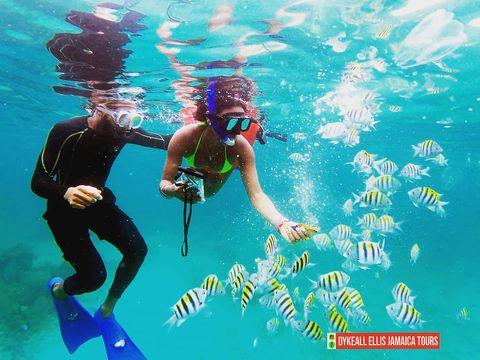
Snorkeling in Jamaica is one of the easiest things you can add to a beach day. The guided tour comes with mask, snorkel and fins plus a short lesson from the crew, so you do not need your own gear or any experience. Most people are in the water within fifteen minutes of stepping onto the boat.
We run snorkeling out of Montego Bay, Ocho Rios and Negril. It is the excursion we recommend most to guests who want to see something of Jamaica other than the inside of a resort.
What will you actually see down there?
The first thing that happens is the sergeant majors find you. They are the small yellow fish with black stripes, they travel in loose crowds, and they will come right up to your hands. Once your eyes adjust you start picking out the rest: parrotfish chewing at the coral (you can hear them crunching), blue tang moving in slow groups, French grunts hanging under ledges, and the odd trumpetfish sitting nose-down pretending to be a stick.
The coral is worth the trip on its own. Brain coral, sea fans that sway with the swell, orange and purple sponges. Some days a ray passes underneath. Nobody can promise you a turtle, but guests do see them.
You are not diving. Most of the reef sits shallow enough that you are looking straight down at it from a few feet away.
Do you need to be a strong swimmer?
No, but you do need to be honest with the crew. Snorkeling is floating, not swimming. Tell the guide before you get in if you are not confident and they will put a vest on you and stay close. Guests who cannot swim at all do this regularly with a vest and a guide within arm's reach.
The part that trips people up is not the water, it is the breathing. Bite the mouthpiece, breathe slow through your mouth, and give yourself two minutes with your face in the water before you go anywhere. Once your brain accepts that the air keeps coming, the rest is easy.
What should you bring?
Swimsuit on under your clothes so you are not changing on a boat. A towel. Reef-safe sunscreen, put on before you leave the hotel and not on the boat. Water shoes, both for the ladder and for any shallow rocky entry where sea urchins sit. A dry bag or a waterproof phone pouch if you want pictures, because there is nowhere dry on a small boat.
A rash guard beats a white t-shirt. It saves your back and shoulders from burning while you float face-down for an hour, which is where most people get caught.
When is the water clearest?
Morning. The sea is usually calm before the wind builds through the afternoon, so a pickup between about 8 and 10 gives you flat water and good light on the reef.
Rain is the other factor. After a heavy downpour the rivers push silt out into the bay and visibility drops for a day or two. If it rained hard overnight, tell us, and we will look at moving you to another day or another excursion.
Can you pair it with something else?
Yes, and most guests do. Our catamaran booze cruises already include a snorkel stop, so if you want the boat, the bar and the reef in one trip, that is the simpler package. The clear kayak photoshoot sits well beside it too, since you are already at the water and already wet.
For a full day we can run snorkeling in the morning and put you somewhere dry after, a shopping stop or a highlight drive. Your driver stays with you the whole time, so you are not waiting on a bus schedule between stops.
How long does the whole thing take?
Budget about two to three hours door to door, depending on where your hotel is. Water time is usually around forty-five minutes to an hour, which sounds short until you are out there and feel how much energy you have spent kicking around.
Tell us your hotel and your dates and we will give you the honest drive time. You can book a tour with us directly, and if you have not sorted your ride from the airport yet, our private airport transfers run to Montego Bay, Falmouth, Ocho Rios and Negril.
Frequently asked questions
Can you go snorkeling in Jamaica if you cannot swim?
Yes. Snorkeling is floating on the surface, not swimming, and the crew will fit you with a flotation vest and stay beside you. Tell the guide before you get in the water that you are not a swimmer so they know to keep you close. Guests who cannot swim do this trip with us regularly.
Is snorkeling gear included on the tour?
Yes. Mask, snorkel and fins come with the guided tour, along with a short briefing from the crew before you get in. You are welcome to bring your own mask if you prefer the fit, but you do not need to buy anything beforehand.
What is the best time of day to snorkel in Jamaica?
Morning, usually a pickup between about 8 and 10. The sea is calmest before the afternoon wind builds, so the water is flatter and the light on the reef is better. Visibility also drops for a day or two after heavy rain, so a dry spell helps.
Do you need water shoes for snorkeling in Jamaica?
They help. Water shoes protect your feet on the boat ladder and on any rocky shallow entry where sea urchins sit in the crevices. Fins go over bare feet, so pack the shoes for getting in and out rather than for the swim itself.